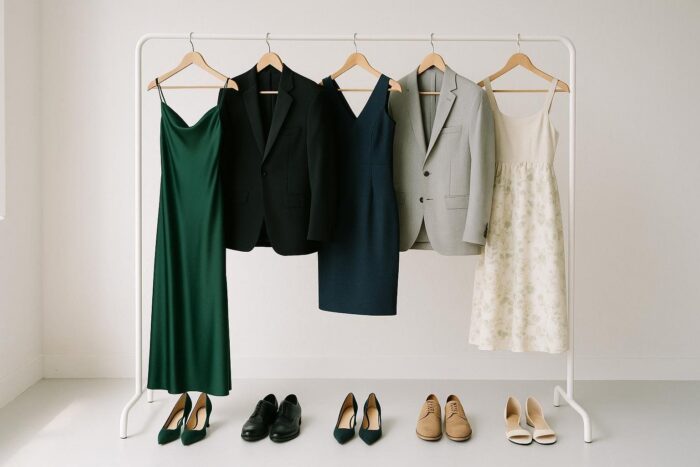
Wedding attire codes tell guests how dressed up the couple hopes everyone will be. From most to least formal, the main categories are white tie, black tie, black tie optional or formal, cocktail, semi-formal, dressy casual and casual. Each one points to a typical dress length, fabric and level of polish.
The trouble is that the words are not always used consistently, and many invitations add their own twist, such as “beach formal” or “garden chic.” This guide explains each code in plain language, shows the kind of dress that fits it, and gives you a few tools for decoding the invitations that don’t follow the usual script.
Wedding attire codes at a glance
| Code | Dress for women | Typical menswear | Usual setting |
|---|---|---|---|
| White tie | Floor-length evening gown | Tailcoat, white bow tie, white waistcoat | Very formal evening events |
| Black tie | Floor-length gown, sometimes a very dressy cocktail dress | Tuxedo, black bow tie | Evening, elegant venues |
| Black tie optional | Gown or elegant midi | Tuxedo or dark suit and tie | Evening, formal but flexible |
| Formal | Gown, dressy midi or elegant jumpsuit | Dark suit and tie | Evening or late afternoon |
| Cocktail | Knee-length or midi dress | Suit, tie usually expected | The most common wedding code |
| Semi-formal | Knee-length or midi, simpler styling | Suit or blazer and trousers | Day or evening, many venues |
| Dressy casual | Polished dress or separates | Blazer optional, no tie needed | Daytime, relaxed venues |
| Casual | Simple, neat sundress or separates | Chinos and a collared shirt | Backyard, beach, courthouse |
White tie
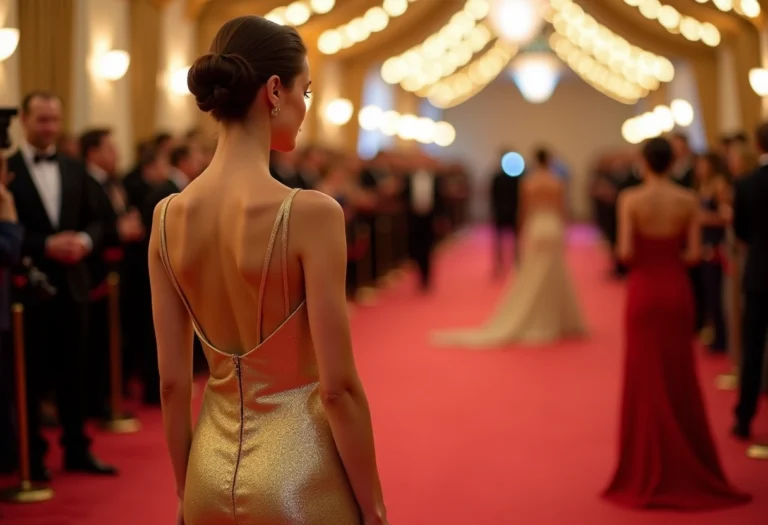
White tie is the most formal dress code there is, and you will rarely see it on a wedding invitation. For women, it means a floor-length evening gown in a luxurious fabric. Some guests add long gloves and fine jewelry. For men, it means a black tailcoat, a white wing-collar shirt, a white waistcoat and a white bow tie.
Short dresses, midis and jumpsuits do not belong here. If you receive a white tie invitation, plan early and consider renting if you don’t own suitable pieces.
Black tie
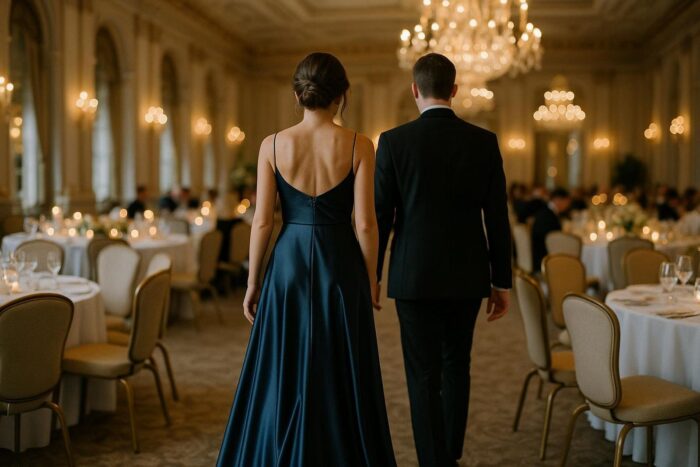
Black tie weddings usually take place in the evening. The standard for women is a floor-length gown. A very elegant, formal cocktail dress can sometimes pass, but the gown is the safe reading. Fabrics like satin, silk, velvet and fine lace fit well, and the silhouette can be anything from a column to a full skirt.
For men, a tuxedo with a black bow tie is expected.
Black tie optional and formal
“Black tie optional” means the hosts will wear black tie but won’t insist that guests do. A floor-length gown, a dressy midi in a rich fabric or an elegant jumpsuit all work. Men can choose between a tuxedo and a dark suit with a tie.
“Formal” on its own is very close to black tie optional. The emphasis is on evening elegance: long or dressy midi hemlines, noble fabrics, polished accessories. A short, casual dress will look out of place.
Cocktail
Cocktail is the most common dress code on wedding invitations. It calls for a knee-length or midi dress with some polish, in fabrics like crepe, satin, chiffon or lace. Elegant jumpsuits and dressy separates are welcome. Men usually wear a suit, often with a tie.
Think “dressed up for an evening out,” not “ready for a gala.” Floor-length formal gowns tend to feel overdressed here.
Semi-formal
Semi-formal sits just below cocktail, and many couples use the two interchangeably. A knee-length or midi dress, perhaps in a lighter or simpler fabric, fits well. Daytime semi-formal weddings invite brighter colors and prints; evening ones lean darker. Men wear a suit or a blazer with trousers, with or without a tie depending on the setting.
Dressy casual and casual
“Dressy casual” asks for a neat, put-together look that stops short of formal: a polished day dress, a nice skirt and top, tailored trousers with a silk blouse. Men can skip the tie and often the jacket.
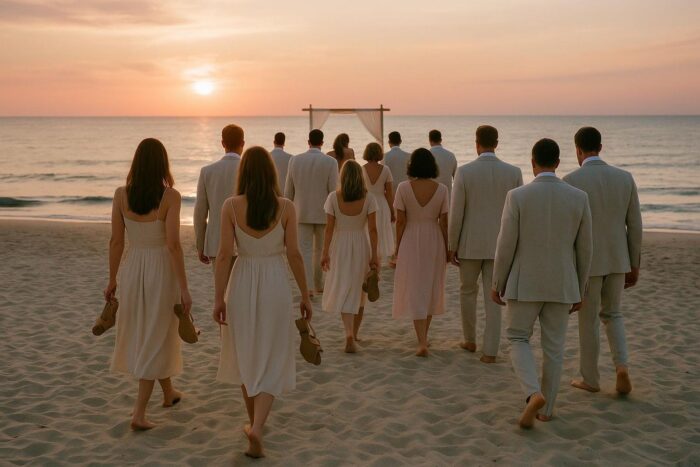
“Casual” is the most relaxed code, typical of backyard, beach or courthouse weddings. It still means making an effort. A pretty sundress, a linen dress or smart separates work well; jeans, athletic wear and flip-flops usually don’t, unless the couple explicitly invites them.
Themed and location-based codes
Couples often describe their dress code through the venue or a theme. A few frequent examples:
- Beach formal: an elegant, lightweight dress in a breathable fabric, often midi or maxi, with flat or wedge sandals suited to sand.
- Garden party: fluid dresses, florals or pastels, and block heels or wedges that won’t sink into grass.
- Western or country: dresses in denim-friendly or prairie styles, often with boots, kept elegant rather than costume-like.
- Festive: the base code with more color, sparkle or seasonal fabrics such as velvet.
Whatever the code, the core choices stay the same: length, fabric, color and shoes. Our main guide on finding the right dress for any wedding goes deeper into seasons, body shapes and colors.
What if there is no dress code on the invitation?
When nothing is specified, read the clues:
- Check the wedding website. Couples often give more detail there, including photos of the venue.
- Look at the invitation itself. Heavy card stock, engraved lettering and formal wording hint at a dressier event. A casual design and relaxed wording suggest the opposite.
- Consider the time. Evening receptions tend to be dressier than daytime ones.
- Consider the venue. A hotel ballroom calls for more polish than a farm or a backyard.
- Ask. A short message to someone in the wedding party is perfectly acceptable.
If you still can’t decide, cocktail attire is usually the safest default. A knee-length or midi dress in a nice fabric fits most weddings without looking over- or underdressed.
Matching the dress to the code: four decisions
Once you know which category the wedding falls into, choosing the outfit comes down to four questions, in this order.
1. Length
The more formal the code, the longer the hem. Floor-length for white tie and black tie, long or dressy midi for formal, knee to midi for cocktail and semi-formal, and any flattering length for casual codes.
2. Fabric
Formality also shows in the material. Satin, silk, velvet and heavy crepe signal evening elegance. Chiffon, lace and light crepe sit comfortably in the middle. Cotton, linen and jersey belong to the casual end.
3. Color and embellishment
Evening codes welcome deep tones, metallics and beading. Daytime codes suit lighter colors and prints. Keep sparkle proportionate to the formality of the event.
4. Shoes and layers
Match the shoes to both the code and the ground, and plan a layer for the ceremony and for the evening temperature. These details often make the difference between looking right and looking almost right.
Rules that apply to every dress code
- Avoid white, ivory and pale champagne unless the couple asks guests to wear white.
- Bring a layer for religious ceremonies, where covered shoulders may be expected.
- Choose shoes for the ground, not only for the look.
- When torn between two options, it is generally better to be slightly overdressed than underdressed.
- Respect cultural dress guidance if the couple shares any, for example for a traditional or religious ceremony.
Wedding attire codes FAQ
What is the most common wedding dress code?
Cocktail attire is the code you will see most often. It calls for knee-length or midi dresses and suits for men.
What is the difference between black tie and formal?
Black tie specifically asks men for tuxedos and usually women for floor-length gowns. Formal is a little more flexible, allowing dark suits for men and dressy midis for women.
Is semi-formal the same as cocktail?
They are very close and often used interchangeably. Cocktail tends to be slightly dressier, with richer fabrics and more deliberate accessories.
Can I wear a jumpsuit to a formal wedding?
An elegant, floor-length jumpsuit in a luxurious fabric can work for formal or black tie optional events. For strict black tie or white tie, a gown remains the expected choice.