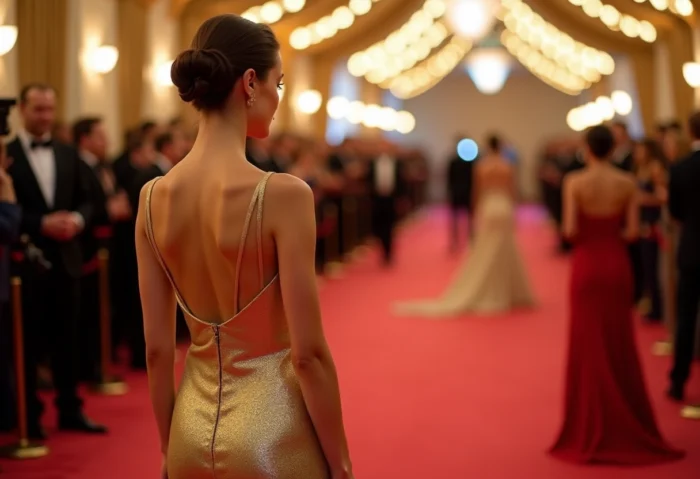
Keke Palmer brought Raquel Welch’s 1970s television glamour to the red carpet at the 2026 CFDA Fashion Awards, wearing a gold Bob Mackie gown first seen on Welch during a performance with Cher. The look connected a memorable television appearance to a major fashion event, showing how an archival design can carry its original story into a new setting. For readers interested in vintage style, it is also a reminder that a gown’s history can be as compelling as its silhouette.
From a 1975 television performance to the CFDA carpet
According to Vogue, the strappy, shimmering-gold gown was custom-made for Welch, who wore it while performing “I’m a Woman” with Cher on The Cher Show in 1975. Dazed also reports that Welch and Cher wore matching Mackie dresses for the number. The design was created for television performance, where movement, stage presence, and a bright visual impression are central to the look.
Nearly five decades later, Palmer wore the vintage gown to host the 2026 CFDA Fashion Awards in New York. Vogue identifies her as the ceremony’s host, and Dazed also describes her in that role. The event took place at the American Museum of Natural History, according to the supplied event information. Palmer described the outfit as a “little vintage moment” in an interview with PEOPLE before the ceremony, as reported in the supplied event information.
The two appearances give the dress a clear fashion timeline: it was first associated with Welch’s performance alongside Cher, then returned to public view on a contemporary awards carpet. Palmer’s choice put the garment’s original wearer and designer back into the conversation without treating the gown as a replica or a fresh design. Its archival status is part of the appeal: the red-carpet look carried a documented link to a specific television moment.
Why archival fashion resonates
Vogue reports that the gown was sourced through Timeless Vixen, a vintage dealer. That detail points to one practical reality behind many archival red-carpet appearances: locating a significant older piece is only one part of the process. The garment also has to be assessed for its condition, fit, and suitability for the person wearing it and the event. Those are general considerations for vintage clothing, rather than details reported about Palmer’s preparation.
For anyone drawn to vintage eveningwear, this look offers useful style context. A distinctive old gown does not need to be copied exactly to feel relevant now. The strongest starting point is often the garment itself: notice its shape, fabric, and construction, then keep accessories and other styling choices from competing with those features. With a highly reflective gold dress, for example, a restrained approach to additional shine can let the fabric remain the focus. This is general styling guidance, not a description of Palmer’s full look.
It also helps to separate inspiration from exact reproduction. A vintage piece may be rare, delicate, or difficult to find in a wearable size. Shoppers can borrow the broader cues instead, such as a long evening silhouette, fine straps, metallic fabric, or a sense of theatrical polish, using contemporary clothing that suits their own needs. The point is not to recreate Welch’s appearance, but to understand how an older design can inform a present-day occasion outfit.
A designer’s signature returns to view
Vogue describes the gown as a rare Bob Mackie design and notes its connection to Mackie’s work for performers. In this case, the dress’s history is unusually legible: its first widely noted setting was a television performance, and its later appearance was on the red carpet at a fashion awards ceremony. That continuity made the garment more than a gold vintage look. It served as a direct reference to Welch’s 1975 performance and the theatrical style associated with Mackie.
Palmer’s CFDA appearance brought that connection to a new audience, while keeping the focus on a piece of fashion history. The gown’s journey from The Cher Show to the awards carpet illustrates why vintage fashion can matter to readers beyond a single event: it offers a way to see design, performance, and personal style meeting across different eras.