


Wedding dress codes
Wedding attire codes run on a ladder from white tie to casual. Find the code on your invitation, see what it means for a dress and for menswear, then open the guide that goes deeper.
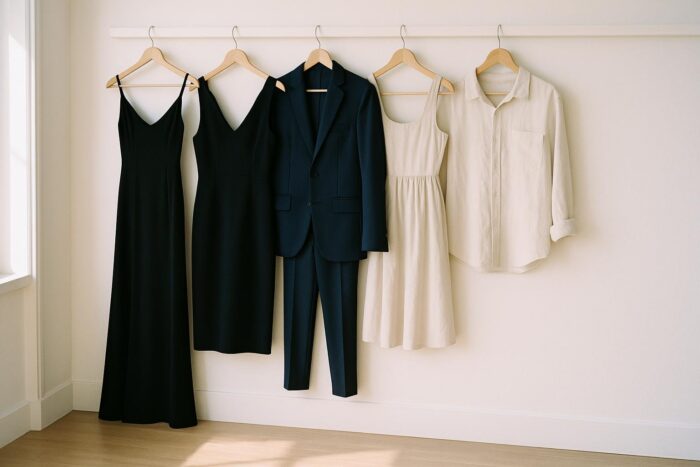
Dress codes at a glance
From most to least formal. Scroll the table sideways on a phone.
| Code | Dress for women | Typical menswear | Usual setting | Our guide |
|---|---|---|---|---|
| White tie | Floor-length evening gown in a luxurious fabric | Black tailcoat, white waistcoat, white bow tie | Very formal evening events, rare on wedding invitations | White tie explained |
| Black tie | Floor-length gown; a very elegant cocktail dress can sometimes pass | Tuxedo with a black bow tie | Evening, elegant venues | Black tie guide |
| Black tie optional or formal | Floor-length gown, dressy midi or elegant jumpsuit | Tuxedo, or dark suit and tie | Evening or late afternoon, formal but flexible | Formal dress guide |
| Cocktail | Knee-length or midi dress, elegant jumpsuit or dressy separates | Suit, tie usually expected | The most common wedding code | Cocktail attire guide |
| Semi-formal | Knee-length or midi, simpler styling | Suit, or blazer and trousers | Day or evening, many venues | Semi formal guide |
| Dressy casual | Polished day dress or dressy separates | Blazer optional, no tie needed | Daytime, relaxed venues | Dressy casual explained |
| Casual | Simple, neat sundress or separates | Chinos and a collared shirt | Backyard, beach, courthouse | Casual attire guide |
Match the dress to the code
Four decisions, in this order.
1
Length
The more formal the code, the longer the hem: floor-length for white tie and black tie, long or dressy midi for formal, knee to midi for cocktail and semi-formal.
2
Fabric
Satin, silk, velvet and heavy crepe signal evening elegance; chiffon, lace and light crepe sit in the middle; cotton, linen and jersey belong to the casual end.
3
Color and sparkle
Evening codes welcome deep tones, metallics and beading. Daytime codes suit lighter colors and prints.
4
Shoes and layers
Match the shoes to the code and to the ground, and plan a layer for the ceremony and for the cooler evening.
Rules that apply to every dress code
- Avoid white, ivory and pale champagne unless the couple asks guests to wear white.
- Bring a layer for religious ceremonies, where covered shoulders may be expected.
- Choose shoes for the ground, not only for the look.
- When torn between two options, it is generally better to be slightly overdressed than underdressed.
- Respect cultural dress guidance if the couple shares any.
Wedding attire codes FAQ
What is the most common wedding dress code?
Cocktail attire is the code you will see most often. It calls for knee-length or midi dresses and suits for men.
What is the difference between black tie and formal?
Black tie specifically asks men for tuxedos and usually women for floor-length gowns. Formal is a little more flexible, allowing dark suits for men and dressy midis for women.
Is semi-formal the same as cocktail?
They are very close and often used interchangeably. Cocktail tends to be slightly dressier, with richer fabrics and more deliberate accessories.
Can I wear a jumpsuit to a formal wedding?
An elegant, floor-length jumpsuit in a luxurious fabric can work for formal or black tie optional events. For strict black tie or white tie, a gown remains the expected choice.
What if the invitation gives no dress code?
Check the wedding website, the invitation itself, the time of day and the venue, or ask someone in the wedding party. If you still cannot decide, cocktail attire is usually the safest default.
Where do I find the full explanation?
Our guide to wedding attire codes explains each code, from white tie to casual, in plain language.