The right wedding guest dress does three jobs at once: it respects the dress code the couple chose, it suits the season and the venue, and it lets you enjoy a long day without tugging at a strap or limping in the wrong heels. Get those three right and the color, the cut and the details become the fun part.
This guide walks through the decision in the order that actually works: read the invitation, factor in the weather and the setting, pick a silhouette that flatters you, then choose color, fabric and accessories. At the end you will find the mistakes guests make most often, a quick checklist and answers to the questions people ask before every wedding season.
Start with the invitation, not the closet
Most couples give guests more information than they realize. The invitation, the wedding website and even the paper stock carry signals about how dressed up the day will be.
- The stated dress code. “Black tie,” “cocktail,” “semi-formal” or “casual” is the single most useful clue. If it is printed, follow it.
- The time of day. An evening ceremony usually leans dressier than a late-morning one, even under the same dress code.
- The venue. A ballroom, a vineyard, a barn, a beach and a courthouse each call for different lengths, fabrics and shoes.
- The tone of the invitation. Engraved cards with formal wording hint at a traditional event. A playful digital invite often means a relaxed crowd.
- The wedding website. Many couples add a FAQ with attire notes, terrain details or a color palette they would love guests to wear or avoid.
When the signals conflict or nothing is stated, ask. A short message to the couple or someone in the wedding party is perfectly polite, and it saves you from guessing.
Wedding guest dress codes decoded
Dress codes form a ladder from most to least formal. Knowing where each rung sits makes choosing dresses for wedding guests far simpler, because it narrows down length and fabric right away.
| Dress code | What it usually means for women | Typical length | Fabrics that fit |
|---|---|---|---|
| White tie | The most formal evening code: a full-length ball gown, often with long gloves | Floor length | Silk, satin, taffeta, heavy crepe |
| Black tie | A floor-length evening gown; a very elegant cocktail dress is sometimes accepted | Floor length | Satin, silk, velvet, beaded or sequined fabrics |
| Black tie optional / formal | A long gown or a dressy midi, a refined jumpsuit in luxe fabric | Floor length or elegant midi | Crepe, satin, chiffon, lace |
| Cocktail | A polished knee-length or midi dress, dressy separates | Knee to midi | Crepe, silk blends, lace, structured cotton |
| Semi-formal | Between cocktail and casual: a nice midi or knee-length dress, lighter for daytime | Knee to midi | Chiffon, crepe, silk, linen blends in daytime |
| Dressy casual / casual | A pretty sundress or simple day dress, never beachwear or gym clothes | Any, often midi | Cotton, linen, jersey, light viscose |
Themed codes such as “beach formal,” “garden party” or “festive” sit on top of this ladder. Read them as a formality level plus a setting: beach formal is roughly semi-formal adapted to sand and wind, while “festive” invites a bit of sparkle or a bolder color within the stated level.
When no dress code is given
Aim for the middle. A knee-length or midi dress in a quality fabric, with shoes you can walk and dance in, fits most weddings with no stated code. Then adjust for the clues: slightly dressier for an evening reception in a hotel, slightly simpler for an afternoon party in a backyard.
Match the dress to the season
Weather decides more about comfort than any trend. The same cut can work year-round if you change the fabric, the sleeve and the layers.
Spring
Spring weather changes by the hour. Light fabrics such as chiffon and crepe work well, with a cover-up for cooler evenings. Soft pastels, fresh greens and floral prints feel natural for the season, and a midi length handles both a breezy ceremony and a warm dance floor.
Summer
Heat and sun drive every choice. Breathable, natural or lightweight fibers such as linen blends, cotton voile and silk keep you cooler than heavy synthetics. Loose or A-line cuts let air circulate, and lighter colors reflect sunlight during an outdoor ceremony. Pack a light wrap for air-conditioned reception halls.
Fall
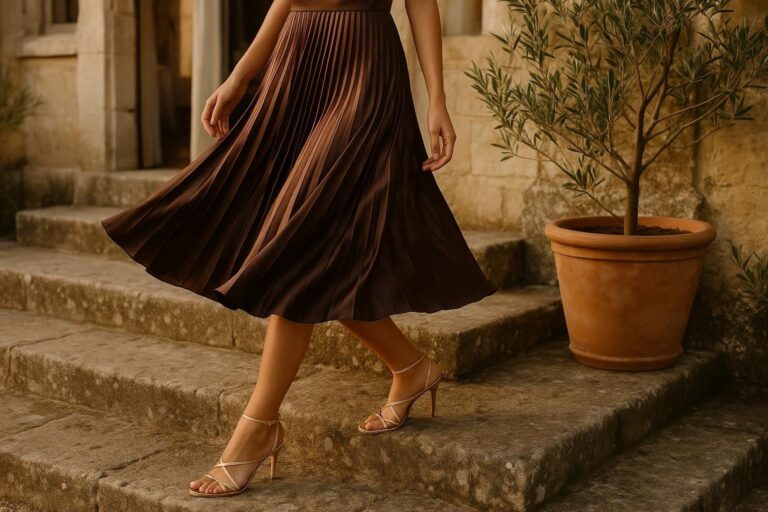
Fall invites richer shades like burgundy, rust, olive, deep green and chocolate brown. Midweight fabrics, three-quarter or long sleeves, and a tailored jacket or wrap handle chilly evenings, especially at outdoor venues such as vineyards and farms.
Winter
Velvet, heavier satin, brocade and wool crepe come into their own. Long sleeves, a longer hemline and opaque or sheer tights help, and a real coat for the walk between car, ceremony and reception matters more than it seems. Jewel tones and metallic accents suit winter’s evening light.
Let the venue guide length, fabric and shoes
A dress that looks perfect in a mirror can fail on a lawn or a sandy beach. Think about the ground you will stand on and the hours you will spend there.
- Ballroom, hotel or historic hall: the natural home of long gowns and dressy midis. Heels are practical on smooth floors.
- Church, temple, mosque or other place of worship: many require or expect covered shoulders and a modest neckline or hem. Bring a shawl or jacket, or choose sleeves from the start.
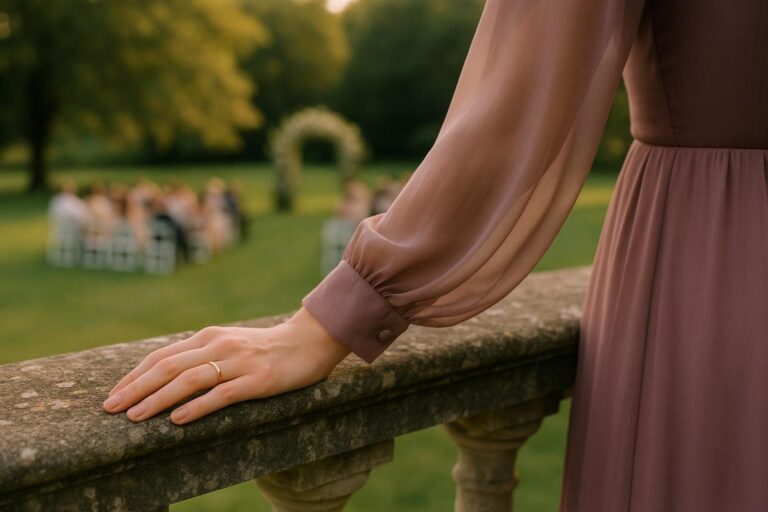
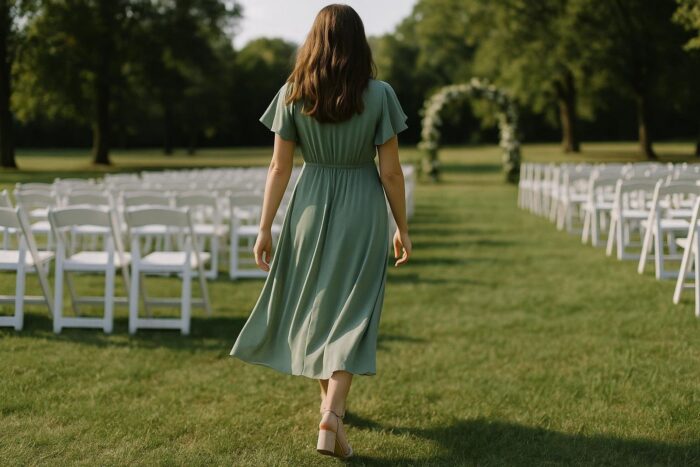
- Garden, vineyard or lawn: block heels, wedges or elegant flats avoid sinking into the grass. Flowing midi dresses and floral or solid colors look at home.
- Beach: light, breathable fabrics that move with the wind, a hem that stays clear of wet sand, and flat sandals or no shoes if the couple suggests it.
- Barn or rustic venue: a romantic midi, a sturdy heel or a polished boot, and a layer for drafty evenings.
- Courthouse or restaurant: a chic day dress or a smart dress and blazer; the scale is intimate, so polish counts more than volume.
Choose a silhouette that flatters you
There is no universal best cut. The most elegant wedding guest dresses are the ones that fit well and let you move, sit and eat comfortably through a long celebration. Use your own shape and comfort as the guide rather than trends.
Cuts that work for many body types
- A-line: fitted at the top, gently flared from the waist. It skims the hips and thighs, suits most figures and is easy to wear all day, which is why A-line dresses stay popular with wedding guests every season.
- Wrap: adjustable at the waist, defines the figure without clinging, and adapts to small changes in fit over a long day.
- Fit-and-flare: close through the bodice and waist, with a fuller skirt that is comfortable for dancing.
- Empire waist: the seam sits just under the bust, and the skirt falls loosely. Comfortable over the stomach and a common choice during pregnancy.
- Sheath: a straight, tailored line that looks sharp in structured fabrics and suits cocktail or formal events.
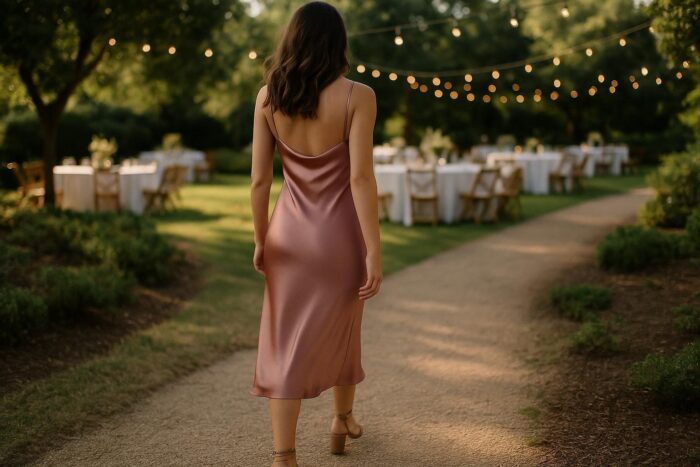
- Slip or bias-cut: fluid and elegant, but it shows every line underneath, so plan your undergarments.
Fit details that make a difference
Look at the details that affect comfort. Straps that stay put, a neckline you do not need to adjust, a lining that stops a light fabric from turning sheer in sunlight, and a skirt that lets you climb stairs and sit on a low chair. If you are between sizes, choose the larger one and have it taken in: a tailor can fix a loose waist much more easily than a tight one.
Petite guests often look best in knee-length or tea-length hems and in cuts with a defined waist, which keep the proportions balanced. Taller guests can carry maxi dresses and bold prints easily. For curvier figures, wrap dresses, A-line skirts and fabrics with some structure provide support without stiffness. These are starting points, not rules: try the dress on and walk, sit and raise your arms before you commit.
Pick a color with confidence
Color is where most guests feel unsure. A few principles cover almost every situation.
- Skip white and shades that read as white. Ivory, cream, champagne and very pale pastels can look bridal in photos. Unless the couple asks for an all-white celebration, choose something else.
- Check the couple’s traditions. In Chinese and Indian weddings, red is often the bride’s color, so guests usually avoid it. In traditional Chinese culture, white and black are associated with mourning, so they are best avoided at a traditional celebration.
- Follow a requested palette. Some couples share colors they would like guests to wear, or ask guests to avoid the bridesmaids’ shade. Honor it.
- Black is often fine. At many evening and formal weddings, a black dress is elegant and accepted. Lighten it with jewelry or a colorful accessory for a daytime event.
- Consider photos. Very bright neon can dominate group pictures. Rich jewel tones, soft pastels and tasteful prints photograph well.
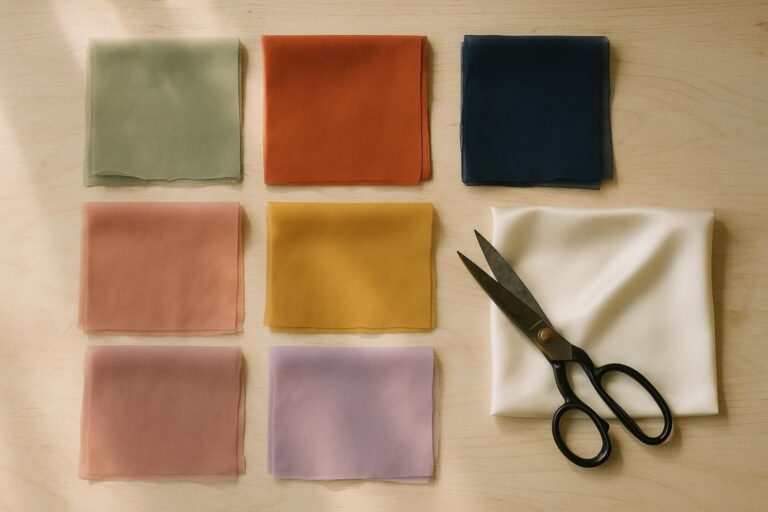
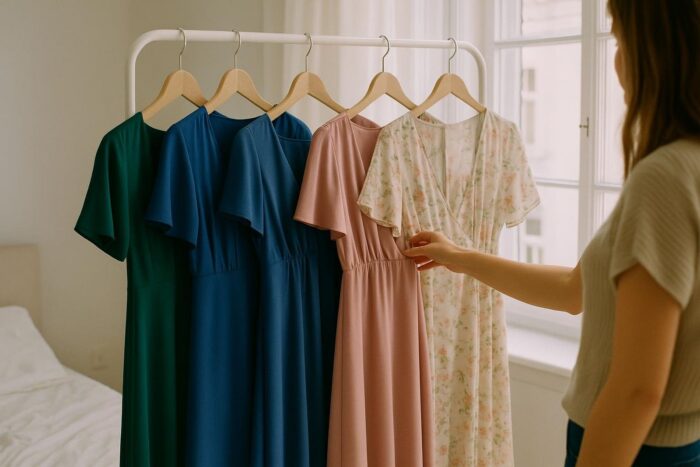
Seasonal palettes help too: pastels and florals in spring, brights and light blues in summer, warm earth and berry tones in fall, deep jewel tones and metallics in winter. Blue in all its shades, from light blue to navy, is one of the easiest colors to wear across seasons and dress codes.
Fabric, quality and budget
The fabric often decides whether a dress looks polished or tired after the ceremony. Crepe and structured blends resist wrinkles and hold their shape. Silk and satin look luxurious but can show water spots and creases. Linen breathes but wrinkles quickly, which is fine at a relaxed beach wedding and less so at a formal one. Chiffon moves beautifully but often needs a lining.
Affordable wedding guest dresses can look expensive if you focus on a few details: a full lining, seams that lie flat, a sturdy zipper, a hem that hangs evenly and a fabric that does not cling or shine cheaply under flash. When you shop, check the return policy and order early enough to allow for a size exchange or a tailoring appointment. Renting is another option for formal gowns you may only wear once.
Planning several weddings in one year? A versatile dress in a solid color can be restyled with different shoes, jewelry and layers so it feels new each time.
Shoes, bags and accessories
Accessories should finish the outfit, not fight it. A few rules keep things easy.
- Shoes: match the heel to the ground and the hours. Block heels and wedges for grass, flat sandals for sand, comfortable heels or dressy flats for long receptions. Break new shoes in at home first.
- Bag: a small clutch or crossbody with room for a phone, lipstick, tissues and a card for the gift table.
- Jewelry: balance it with the dress. A busy neckline or a bold print asks for simple pieces; a plain dress can take statement earrings or a necklace.
- Layers: a pashmina, a tailored blazer, a cropped jacket or a coat, chosen to match the formality of the dress.
- Hair: think about the neckline and the weather. An updo shows off a halter or strapless dress and stays neat in humidity.
Common wedding guest mistakes to avoid
Most dress regrets come from a handful of avoidable errors.
- Wearing white or near-white. The most well-known rule, and still the most broken.
- Ignoring the dress code. Under-dressing at black tie or showing up in a sequined gown at a backyard brunch both stand out for the wrong reasons.
- Forgetting the venue. Stilettos on a lawn, a long train on a beach, bare shoulders in a place of worship that asks for coverage.
- Choosing an outfit you cannot sit or dance in. If you need to adjust it every five minutes, it will distract you all day.
- Skipping a layer. Evening temperature drops and strong air conditioning catch many guests off guard.
- Trying to steal the spotlight. A dramatic gown with a train, a veil-like headpiece or an outfit that looks bridal is not a guest look.
- Buying too late. Leave time for delivery, returns and alterations, especially in peak wedding season.
Your wedding guest dress checklist
Before you commit to a dress, run through these quick checks:
- Does it match the stated dress code, or the middle ground if none is given?
- Is it suited to the season and the likely weather?
- Can you walk on the venue’s ground in the shoes you plan to wear?
- Does it respect any cultural or religious expectations of the ceremony?
- Is it clearly not white, ivory or anything a bride might wear?
- Can you sit, eat, hug and dance in it comfortably?
- Do you have a layer for the evening and a bag big enough for essentials?
- Have you left time for alterations?
Wedding guest dress FAQ
How long should a wedding guest dress be?
It depends on the dress code. Floor length is standard for black tie and white tie, knee to midi length suits cocktail and semi-formal weddings, and casual events leave you free to choose. When unsure, a midi dress is the safest length.
Can I wear the same dress to more than one wedding?
Yes. Few people notice, especially when the guest lists differ. Change the shoes, jewelry and layer to give the dress a new look for each event.
Is a jumpsuit acceptable instead of a dress?
At most cocktail, semi-formal and casual weddings, a dressy jumpsuit in a quality fabric is a stylish alternative. For black tie, choose a floor-length, very elegant version or a gown.
What if I really do not know how formal the wedding will be?
Ask the couple or a member of the wedding party. If that is not possible, go slightly dressier rather than more casual: a polished midi dress with a layer and comfortable heels suits most weddings.