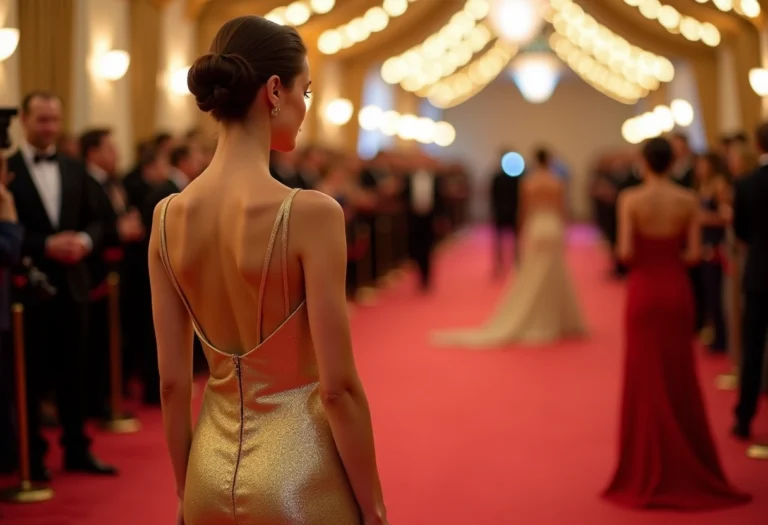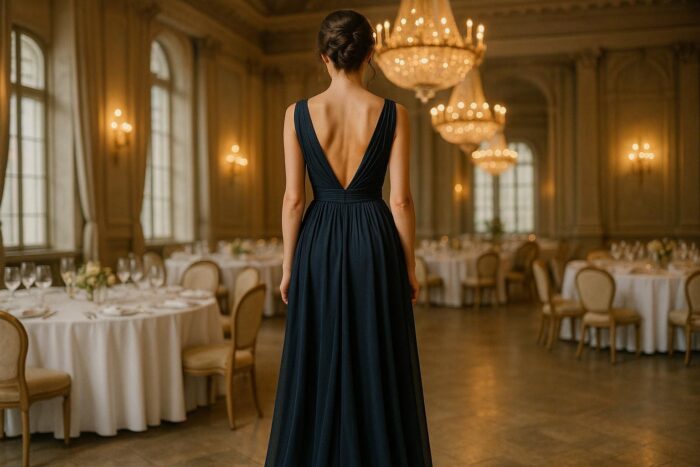
Formal wedding guest dresses are long gowns or very polished midi dresses in rich fabrics, worn with elegant shoes and refined accessories. When an invitation says “formal attire,” the couple is asking guests to dress for an elegant evening: a step below strict black tie, but well above the cocktail dress you might wear to a party.
The good news is that formal does not mean costume. You need the right length, the right fabric and a finished look. Below, you will find what the code means, how to choose a dress, which fabrics and colors work best, and how to adapt it to a summer or daytime celebration.
What Does Formal Attire Mean for a Wedding?
Formal wedding attire, sometimes written “black tie optional” or “formal attire requested,” signals an elegant event, usually held in the evening at a hotel, a ballroom, a museum or a historic estate. Men typically wear a dark suit and tie, and some choose a tuxedo. Women can wear a floor length gown, but a sophisticated midi or a dressy jumpsuit is often acceptable too.
The main difference with black tie is flexibility. Black tie traditionally calls for tuxedos and floor length evening gowns. Formal leaves more room: a tea length dress in silk or a sleek pantsuit in satin can fit, as long as the overall look is clearly evening wear.
Compared with cocktail attire, formal is longer, richer and more structured. A knee length dress that would be perfect at a cocktail wedding can look underdressed at a formal one, unless the fabric and styling are very elevated.
Choosing a Formal Wedding Guest Dress
Length: floor length, maxi or elevated midi
A floor length gown is the most reliable choice for a formal evening wedding. It removes all doubt and photographs well. A maxi that grazes the ankle works in the same way. An elevated midi, ending mid-calf, is also accepted by many hosts if it is cut in a luxurious fabric and paired with dressy heels and jewelry.
Silhouettes that suit a formal event
- Column or sheath gown: clean, modern and easy to accessorize.
- A-line gown: flattering on most body types, with room to move and dance.
- Wrap maxi: adjustable at the waist, a good option for long receptions.
- One-shoulder or off-the-shoulder: adds evening drama without extra embellishment.
- Dressy jumpsuit: wide legs in satin or crepe read as formal when styled with heels.
Whatever the cut, fit matters more than trend. A simple gown that has been hemmed to the right length for your shoes looks more formal than an elaborate dress that drags or gapes.
Fabrics that read as formal
Fabric does a lot of the work in formal dressing. Favor materials with drape, sheen or structure:
- Silk, satin and charmeuse for a fluid evening look.
- Crepe for a matte, sleek finish.
- Chiffon and georgette for movement, especially in warm weather.
- Velvet for fall and winter.
- Lace, tulle or beaded details in moderation.
Cotton, linen, jersey and denim tend to look too casual for this dress code, even in a long cut.
Formal Wedding Attire for Women Beyond the Dress
A dress is the expected answer, but it is not the only one. Formal wedding attire for women can also include:
- A tailored satin or crepe pantsuit with a silk camisole and heels.
- A wide leg jumpsuit with a defined waist and statement earrings.
- A long skirt in silk or taffeta with a fitted top or a fine knit.
The key is coherence: every piece should look as intentional and elevated as a gown would.
Colors, Accessories and Shoes
Colors
Jewel tones such as emerald, sapphire, burgundy and deep plum are classic for formal evenings. Navy, dark green and black are elegant and often accepted, though some families or cultures still prefer guests avoid black. Pastels and soft metallics work for spring and summer formal weddings. White, ivory, cream and very pale champagne remain off limits unless the couple has asked for them.
Accessories
- A small clutch or minaudiere rather than a daytime bag.
- Statement earrings or a necklace, chosen according to the neckline.
- A wrap, stole or tailored coat for a cold venue or a late exit.
Shoes
Heeled sandals, pumps or dressy block heels suit most formal settings. If the reception is on grass or cobblestones, block heels are more practical than stilettos. Bring a pair of discreet flats if you plan to dance for hours.
What to Wear to a Formal Wedding by Season and Time
| Situation | Dress idea | Fabric | Finishing touch |
|---|---|---|---|
| Summer evening | Flowing maxi with thin straps | Chiffon, silk | Light wrap, metallic sandals |
| Fall evening | Long sleeve column gown | Crepe, satin | Jewel tone, gold jewelry |
| Winter evening | Velvet gown or satin skirt with knit | Velvet, heavy satin | Tailored coat, closed pumps |
| Spring or daytime formal | Elevated midi or pastel maxi | Crepe, organza | Block heels, pearl earrings |
Summer formal wedding attire can feel tricky because heat pushes you toward lighter clothes. Keep the length and the elegance, but choose breathable fabrics and fewer layers. A pale chiffon maxi or a silk slip dress in a soft color keeps you cool while respecting the code.
If you are still weighing different options, it helps to step back to the basics of what to look for in a wedding guest dress, from the invitation wording to the venue and your own comfort, before narrowing down to a formal gown.
Reading the Invitation Wording
Couples phrase the dress code in different ways, and each wording shifts the expectations slightly.
- “Formal attire”: gowns, elegant maxis or dressy midis in rich fabrics; dark suits for men.
- “Black tie optional”: the hosts will wear black tie, and guests may join them. A floor length gown is the natural match, though a very elegant midi is usually fine.
- “Formal/semi formal”: the couple is open to both. A dressy midi or a simple long dress covers you either way.
- “Evening attire”: often used as a softer synonym for formal, with a clear nod to after-dark dressing.
When the invitation says nothing, the venue and start time are your best clues. A 7 p.m. ceremony in a grand hotel suggests formal wear, even without an explicit line. Many couples also post details on their wedding website, so check there before you shop, and do not hesitate to ask a member of the wedding party if you are still unsure.
Preparing Your Formal Look
Formal dresses often need a little more planning than everyday outfits. Leave time for alterations: a hem adjusted to your shoes or a strap shortened by a tailor can transform how a gown looks. Try the full outfit at home, including shoes, undergarments and the wrap you plan to wear, and sit, walk and raise your arms to check that everything stays in place. Pack a small kit in your clutch with blotting papers, a lipstick, safety pins and a phone charger, since formal receptions often last late into the night.
Evening Wear for Wedding Guests: Mistakes to Avoid
- Anything bridal. White lace gowns, long veils or dramatic trains draw attention from the couple.
- Too casual a fabric. A long cotton sundress is still a sundress.
- Too short. A mini dress rarely fits formal wedding attire.
- Ignoring the venue. A religious ceremony may require covered shoulders; bring a jacket or a stole.
- Uncomfortable shoes. Formal weddings often mean long evenings, so test your heels before the day.
Formal Wedding Guest Dresses FAQ
Do I have to wear a floor length dress to a formal wedding?
Not always. A floor length gown is the safest option, but many hosts accept an elevated midi in a rich fabric, styled with heels and evening accessories.
What is the difference between formal and black tie wedding attire?
Black tie traditionally expects tuxedos and floor length gowns. Formal is a little more flexible and allows dark suits, dressy midis and elegant jumpsuits.
Can I wear black to a formal wedding?
Black is widely accepted at formal evening weddings in the United States. Add color through jewelry or a clutch, and check with the couple if you know the family is more traditional.
What should I wear to a daytime formal wedding?
Choose lighter colors and fabrics: a pastel maxi, a floral silk midi or a crepe dress with block heels. Save heavy velvet and dark sequins for the evening.