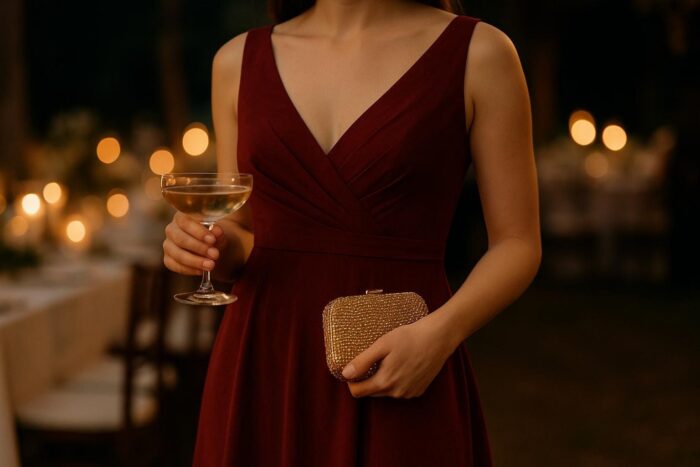
Cocktail attire is the dress code you will see most often on wedding invitations, and also the one that raises the most questions. In short, it sits between semi-formal and formal: polished, tailored and a little festive, but not a floor-length gown or a tuxedo. For women, that usually means a knee-length or midi dress, an elegant jumpsuit or a dressy separates look. For men, a suit, often with a tie.
The phrase sounds simple, yet hosts use it in slightly different ways. Some add a word like “casual” or “festive” that shifts the expectation, and the venue, the season and the time of day all play a part. This guide explains what cocktail attire means, which lengths and fabrics work, and how to read each common variation so you arrive dressed right.
What is cocktail attire?
Cocktail attire is a dress code that asks guests to look dressed up and put together without going all the way to evening wear. Think of the kind of outfit you would wear to an evening party at a nice restaurant or a hotel bar: refined fabrics, clean tailoring, a bit of shine or color if you like.
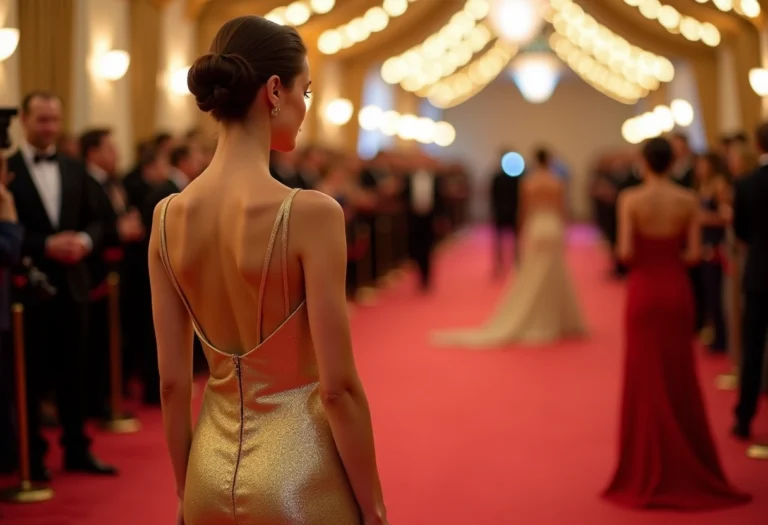
What it does not mean is equally useful. Cocktail attire is not a sundress and sandals, not jeans with a nice top, and not a ball gown. If an outfit would feel right at the office on an ordinary Tuesday, it is probably too plain. If it would feel right on a red carpet, it is probably too much.
Cocktail attire vs. formal and semi-formal
Dress codes form a ladder, and cocktail sits on a middle rung. The table below places it next to its neighbors.
| Dress code | Typical dress length | Typical menswear | Overall feel |
|---|---|---|---|
| Formal / black tie optional | Floor-length or a very dressy midi | Tuxedo or dark suit and tie | Evening elegance |
| Cocktail | Knee-length to midi | Suit, tie usually expected | Polished and festive |
| Semi-formal | Knee-length to midi, simpler styling | Suit or blazer and trousers | Smart and relaxed |
| Dressy casual | Any flattering length, lighter fabrics | Blazer optional, no tie needed | Neat and comfortable |
In practice, many hosts treat cocktail and semi-formal almost as synonyms. The difference is mostly in finish: cocktail leans a little dressier, with richer fabrics and more deliberate accessories.
Cocktail attire for women: lengths and silhouettes
The classic cocktail dress hits somewhere between just above the knee and mid-calf. Knee-length and midi are the safest choices because they read as dressy without looking like evening wear. A mini can work at a trendy evening party, but for a wedding, especially one with a religious ceremony, a slightly longer hem is the more comfortable bet.
Silhouettes are wide open. A few that consistently work:
- Sheath: fitted and streamlined, the most classic cocktail shape.
- A-line or fit-and-flare: fitted at the waist with a skirt that moves, easy to wear for hours and to dance in.
- Slip dress: elegant in satin or silk-like fabric, ideally paired with a jacket or wrap for the ceremony.
- Wrap dress: adjustable and forgiving, dressy when made in a fluid, slightly lustrous fabric.
- Tailored jumpsuit or dressy separates: a wide-leg jumpsuit or a silk top with a pleated skirt are perfectly acceptable alternatives to a dress.
If you are dressing for a wedding and still hesitating between shapes and colors, our main wedding guest dress guide walks through the choice by season, venue and body shape.
Fabrics that read as cocktail
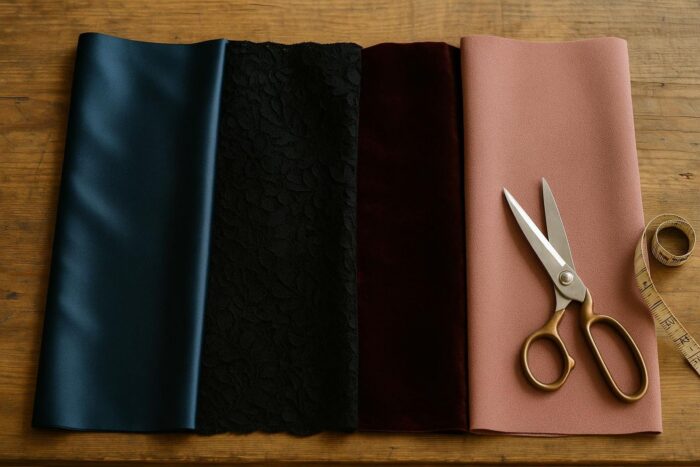
Fabric is often what separates a cocktail dress from a daytime dress of the same cut. Look for materials with some structure, drape or sheen:
- Satin, crepe and silk or silk-like blends for a smooth, polished finish.
- Chiffon and georgette for warm weather, especially in layered or pleated designs.
- Lace, velvet and brocade for evening events and cooler months.
- Subtle embellishment such as beading, sequins or metallic threads, used with restraint.
Plain cotton jersey, denim and heavy linen tend to look too casual. Linen can still work in a dressier, well-cut version for a summer event, but it wrinkles quickly, so plan for that.
Shoes, accessories and outerwear
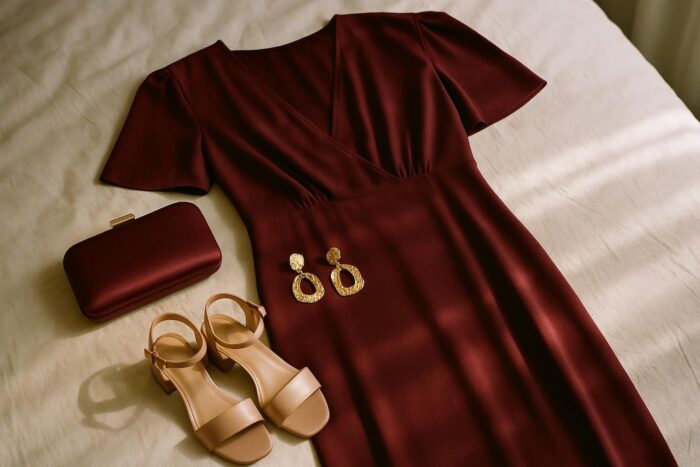
Cocktail attire rewards a finished look. Heels, dressy block heels, elegant flats or embellished sandals all fit the code; athletic sneakers and flip-flops do not. For an outdoor venue on grass or gravel, a block heel or wedge will save both your shoes and your evening.
A small clutch or structured mini bag beats a large everyday tote. Jewelry can be statement or delicate, but one focal point usually looks better than several competing ones. For outerwear, a tailored blazer, a cropped jacket, a pashmina or a dressy coat keeps the outfit polished when the temperature drops.
Cocktail attire variations you may see on invitations
Hosts increasingly add a qualifier to the dress code. Each one nudges the expectation up or down.
Casual cocktail attire
Also written as “cocktail casual,” this relaxes the code slightly. A simpler dress in a nice fabric, dressy separates or a smart jumpsuit all fit. Men can often skip the tie and wear a blazer with trousers instead of a full suit.
Formal cocktail attire
This pushes the code toward evening wear. Choose richer fabrics, a midi or a dressy tea-length hem, and more polished accessories. A dark suit and tie is the norm for men.
Festive cocktail attire
Common for holiday-season events and New Year’s Eve weddings. It invites color, sparkle, velvet, metallics or a fun print. The shape stays cocktail; the mood gets bolder.
Cocktail chic and elevated cocktail attire
Both suggest fashion-forward choices: an interesting neckline, a bold color, statement earrings or modern tailoring. There is no fixed rule, so read them as an invitation to look stylish rather than strictly classic.
Beach, garden or coastal cocktail attire
When a location is named, adapt fabrics and shoes to it. Lighter materials, breathable weaves and footwear that works on sand or grass keep you comfortable while still honoring the cocktail level of polish.
Business cocktail attire
Seen more on corporate invitations than wedding cards. It means professional but party-ready: a sharp dress or tailored separates, fewer sequins, more structure.
Adapting cocktail attire to season and time of day
A cocktail dress for a June afternoon and one for a December evening can look very different, even though both respect the same code.
- Spring and summer: lighter fabrics, brighter or softer colors, prints, open-toe shoes, a light wrap for the evening.
- Fall and winter: deeper shades, long sleeves, velvet or heavier crepe, closed-toe shoes, tights if you want them, a real coat.
- Daytime events: less shine, fresher colors, simpler jewelry.
- Evening events: darker tones, satin or metallic touches, a bolder lip or statement earrings.
Black is widely accepted at cocktail events today, including many weddings, though it helps to soften it with color or texture for a daytime ceremony. White, ivory and anything that could be mistaken for a bridal look are best avoided.
Common mistakes to avoid
- Choosing a floor-length gown and ending up overdressed compared to other guests.
- Wearing a casual cotton sundress that looks underdressed next to tailored suits.
- Ignoring the venue: stilettos on a lawn or a heavy dress at a summer outdoor ceremony.
- Forgetting a layer for a church ceremony or a chilly evening reception.
- Over-accessorizing, which can make an elegant dress look busy.
When in doubt, check the couple’s wedding website, which often gives more detail than the invitation, or ask someone in the wedding party. A quick question is always better than a guess.
Cocktail attire FAQ
Can I wear a long dress to a cocktail attire event?
A flowing, casual maxi can work at a relaxed summer event, but a formal floor-length gown usually looks overdressed. Midi and knee-length are the safest lengths.
Is black acceptable for cocktail attire at a wedding?
Generally yes, especially for evening weddings. For a daytime ceremony or a very traditional family, add color through accessories or choose a dark jewel tone instead.
Can women wear pants to a cocktail attire wedding?
Yes. A tailored jumpsuit, wide-leg trousers with a silk blouse or a dressy pantsuit all fit the code, as long as the fabric and fit look polished.
Does cocktail attire require a tie for men?
A suit with a tie is the traditional reading. “Cocktail casual” usually allows skipping the tie, but when the invitation says plain cocktail attire, wearing one is the safer choice.