A midi wedding guest dress, with a hem that falls somewhere between just below the knee and mid-calf, is one of the easiest choices you can make for a wedding. It looks elegant without being formal, it covers enough for a religious ceremony, and it works from a spring garden party to a winter evening reception.
The length is forgiving, but it does ask for a little thought. The cut, the exact hem position and above all the shoes decide whether a midi looks sleek or slightly heavy. Here is how to get it right.
Why the midi is the go-to length for wedding guests
At a cocktail or semi-formal wedding, the midi hits the sweet spot. It is dressier than a knee-length day dress, yet not as formal as a floor-length gown. It also solves practical problems: no worrying about sitting in a short dress, no hem to trip over on stairs or dancing.
It is especially at home with the cocktail dress code. If you want to see how the midi fits alongside other lengths and silhouettes for that code, our guide to the cocktail wedding guest dress covers the full range.
The most flattering midi cuts
- A-line midi: fitted at the waist, gently flared. It balances the proportions and suits a wide range of body shapes.
- Wrap midi: defines the waist, adjusts easily and moves beautifully in fluid fabrics.
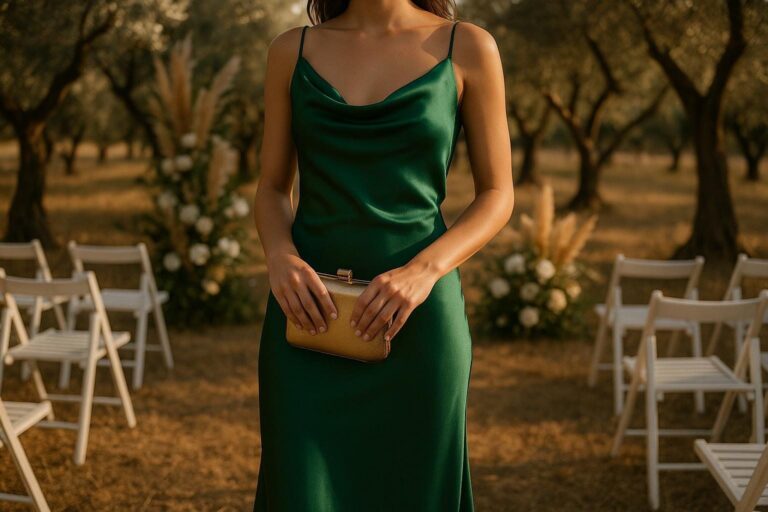
- Slip midi: bias-cut satin that skims the body, elegant for evening weddings.
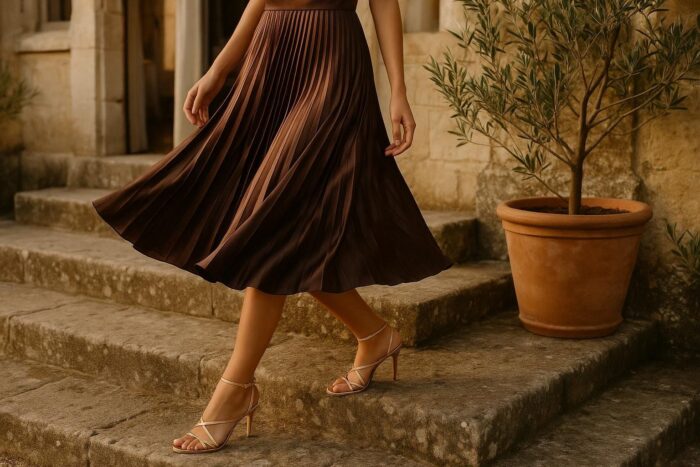
- Pleated midi: a skirt that swings when you walk, great for dancing.
- Sheath midi: sleek and tailored, ideal for city venues and dressier events.
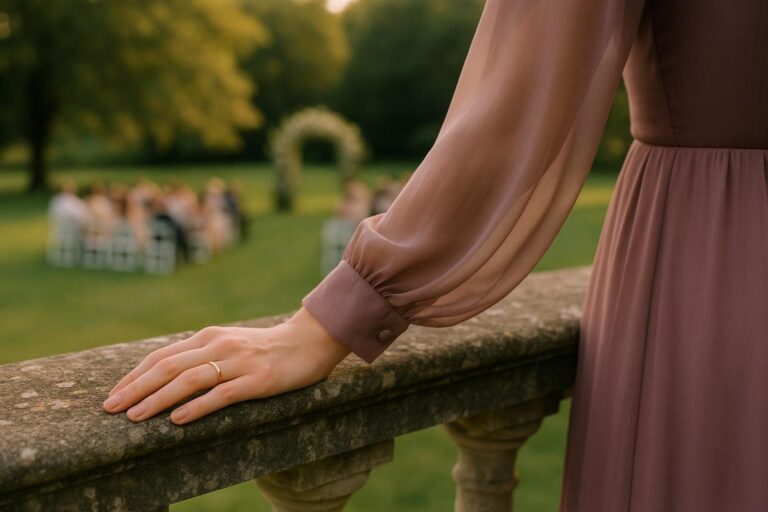
- Midi with sleeves: puff, flutter or long sleeves give coverage for church ceremonies and cooler seasons.
If you are petite, look for a midi that ends just below the knee rather than at mid-calf, or one with a side slit, to avoid being swallowed by the fabric. If you are tall, almost any midi length will work.
Which shoes go with a midi dress?
Shoes matter more with a midi than with any other length, because the hem draws the eye toward the ankle.
| Shoe | Effect | Best with |
|---|---|---|
| Pointed pumps | Lengthen the leg | Sheath and slip midis, evening weddings |
| Strappy heeled sandals | Light and airy, show more skin | Summer and spring midis |
| Block heels | Stable and comfortable | Garden, barn or outdoor weddings |
| Low-cut flats | Relaxed and elegant | Daytime and dressy casual weddings |
| Heeled ankle boots | Modern and warm | Fall and winter midis |
Thick ankle straps and heavy flat sandals can visually shorten the leg when paired with a longer hem. A shoe with a lower vamp, a pointed toe or a nude tone close to your skin keeps the line long.
Styling a midi wedding guest dress by season
Spring and summer
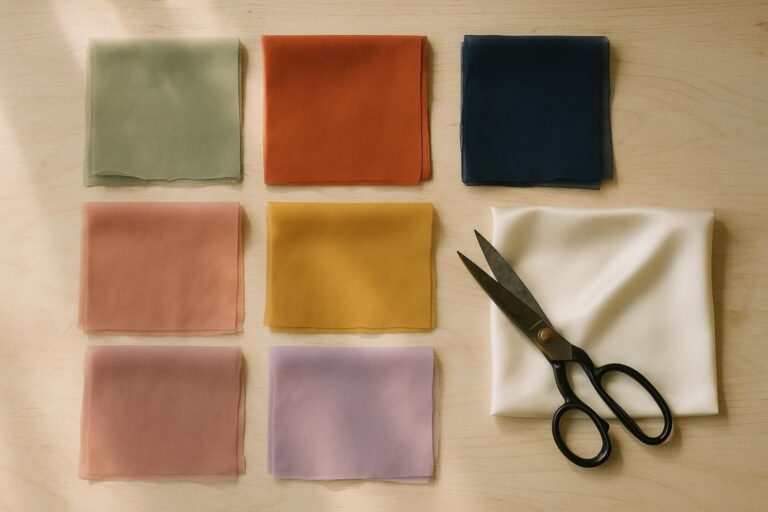
Choose chiffon, georgette, light crepe or dressy cotton blends. Florals, pastels and bright solids suit daylight, and a light wrap or cropped jacket handles cooler evenings.
Fall
Satin and crepe in warm, deep colors such as rust, burgundy or forest green look right as the light fades. Add a tailored blazer or a leather jacket for outdoor ceremonies.
Winter
Velvet, heavier satin and long sleeves bring warmth. Sheer or opaque tights and heeled boots make a midi comfortable in cold weather, and a long coat completes the look.
Who the midi works for
In short, almost everyone. The midi is often recommended for guests who want coverage, for those who prefer not to wear a mini, and for anyone who wants one versatile dress for several weddings in a year. Adjust the cut rather than the length: a wrap for waist definition, an A-line for balance, a column shape for a streamlined look.
For the bigger picture, including colors to avoid and how the venue changes your choice, see our guide on how to choose what to wear as a wedding guest.
Accessories that finish the look
A midi dress already has presence, so accessories can stay simple. A small clutch, one striking pair of earrings or a delicate necklace, and a layer for the ceremony are enough. If the dress has a high neckline, favor earrings; with a V or square neckline, a pendant works nicely. A belt can help define the waist on a straight midi.
Midi wedding guest outfits beyond the dress
The same length works in separates. A satin midi skirt with a fitted knit or a silk camisole, or a pleated midi skirt with a matching top, gives the look of a dress with more flexibility. Separates are also easy to rewear: the skirt can return with a different top at the next wedding, and each piece works on its own for other occasions. Keep the fabrics on the same level of polish so the outfit reads as one coordinated look.
Midi wedding guest dress FAQ
Is a midi dress appropriate for a formal wedding?
A very dressy midi in satin or a rich fabric can work for “formal” or “black tie optional,” but for strict black tie, a floor-length gown is the traditional expectation.
Can I wear a midi dress to a beach wedding?
Yes. Choose a light, breathable fabric and flat or wedge sandals that won’t sink into the sand.
What is the difference between a midi and a tea-length dress?
Midi is a broad term for hems that fall between just below the knee and mid-calf. Tea-length is a specific, slightly longer midi that typically falls around the lower calf, often with a full skirt.
Are midi dresses good for petite guests?
They can be. Opt for a hem that sits just below the knee, a defined waist and shoes that lengthen the leg.