Slimming mother of the bride dresses are not about squeezing into something smaller. They use design tricks that dressmakers have relied on for generations: gathered fabric, diagonal lines, a well-placed waist seam and a lining that smooths everything underneath.
Once you know how these details work, you can spot them on the rack in seconds and combine them to suit your own shape. Here are the features that make the most difference, and how to use color and print to finish the effect.
Ruching: the most effective detail
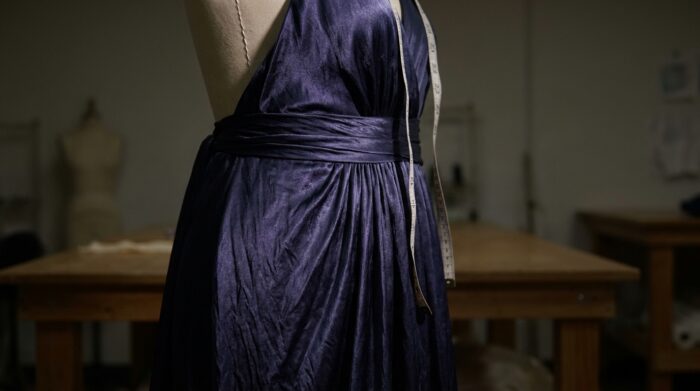
Ruching is fabric gathered into soft folds, usually across the bodice, the waist or one side of the dress. It works in two ways. The folds add texture that disguises what lies underneath, and the gathering creates diagonal lines that lead the eye across the body rather than around it.
Side ruching, gathered at one hip, is particularly good at softening the midsection. Ruching across the whole bodice, sometimes called a draped bodice, flatters the bust and waist at once. Look for it in matte jersey or crepe, which hold the folds without adding bulk.
Wrap and faux-wrap fronts
A wrap dress crosses the front of the body on a diagonal, creating a V-neck and a defined waist. The V lengthens the neck and torso, and the diagonal line slims the waist visually.
For a wedding, a faux-wrap is usually more practical: the front is stitched in place, so it never gapes when you sit or lean. A tie or sash at the side adds a little detail and lets you adjust the waist slightly.
Empire waist
An empire waist sits just below the bust, the narrowest point of the upper body for many women. From there, the skirt falls straight or flares slightly, gliding over the tummy and hips.
This is one of the most comfortable slimming cuts, with nothing pressing on the stomach during dinner. It suits floor-length chiffon gowns as well as tea-length crepe dresses. Choose a skirt with enough fabric to fall freely; a very narrow skirt cancels the effect.
Shaping linings and built-in support
Some eveningwear dresses build shaping into the garment itself, with a firmer power-mesh lining across the midsection or a structured bodice with light boning. It smooths the silhouette without separate shapewear.
- Power-mesh lining: a stretchy, firm inner layer that gently holds the stomach and hips.
- Boned bodice: keeps the torso upright and smooth.
- Built-in cups: lift and shape the bust, which in turn defines the waist.
Always sit down in the fitting room. Shaping should feel like a firm hug, not a corset, especially for a day that can last ten or twelve hours.
Other cuts and details that help
| Detail | Why it slims |
|---|---|
| V-neck or sweetheart neckline | Creates a vertical line and draws the eye to the face |
| A-line skirt | Skims the hips and thighs without clinging |
| Vertical seams or panels | Break up the width of the body and lengthen it |
| Sheer or flutter sleeves | Cover the upper arm without adding visual weight |
| Long jacket or duster | Frames the body with two long vertical lines |
| Hem just below the knee or at the ankle | Ends at a slim point of the leg |
Details to avoid include stiff, shiny fabrics that catch light on every curve, horizontal bands across the widest part of the body and very tight sheath dresses without structure.
Colors that structure the silhouette
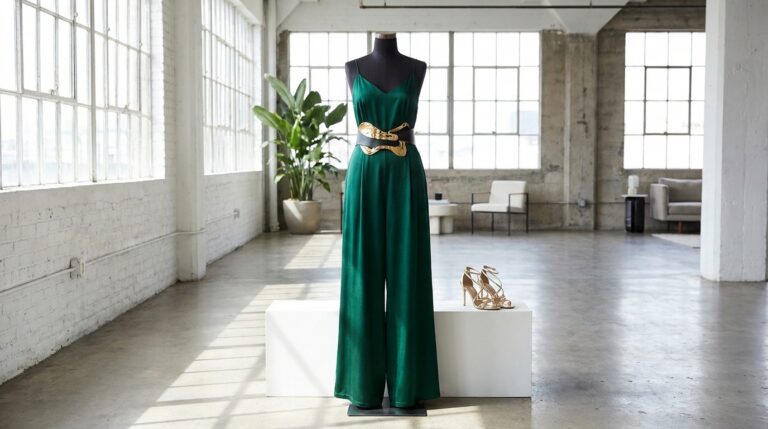
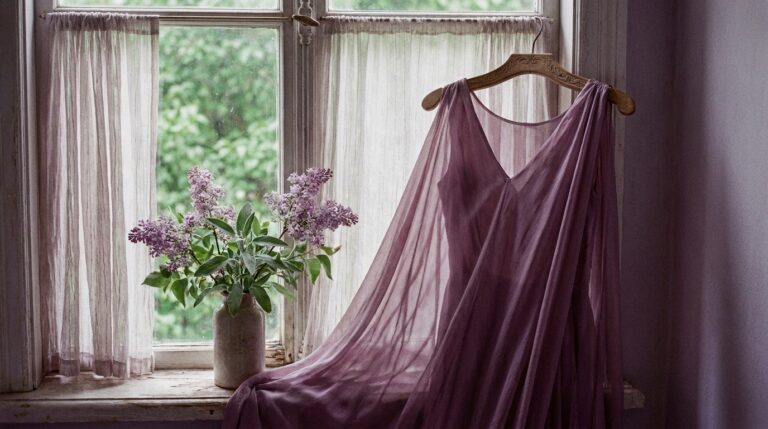
Darker and mid-depth colors recede, while bright and pale shades advance. That does not mean you have to wear navy. Jewel tones like emerald, sapphire, plum and deep teal are flattering and festive. Dusty blue, mauve and rose work for daytime weddings.
A tonal outfit, with dress, jacket and shoes in the same color family, creates one uninterrupted column that elongates the figure. If you want contrast, place the lighter or brighter color near your face, in a necklace, a neckline detail or the bodice, and the darker color below.
Prints: scale and placement
Prints can be very flattering if you choose them carefully.
- Medium-scale prints are the safest: too small and they blur, too large and they widen.
- Prints on a dark background look more slimming than prints on a pale one.
- Vertical or diagonal patterns lead the eye up and down.
- Placed prints, such as a floral concentrated at the hem or shoulder, draw attention where you want it.
Slimming plus size mother of the bride dresses
For fuller figures, the most effective combination is usually a V-neck or wrap bodice, ruching at the waist, a softly flared A-line skirt and a shaping lining, all in a matte fabric with some weight. Our guide to plus size mother of the bride dresses goes further into support, fabrics and lengths for curvier women.
Fit remains the deciding factor. A dress one size too small creates pulling lines that undo every slimming detail, while a dress tailored to your measurements looks smooth and polished. Budget for alterations, and bring your shoes and undergarments to each fitting. For dress codes, seasons and the shopping calendar, our step-by-step guide to finding your wedding outfit covers the rest.
Frequently asked questions
What dress style is most slimming for a mother of the bride?
A wrap or faux-wrap dress with ruching at the waist, or an empire waist gown with a flowing skirt, suits most figures and is easy to wear all day.
Does a dark color really look slimmer?
Darker shades do minimize volume, but cut and fit matter more. A well-fitted dress in a mid-tone color often looks better than a poorly fitted black one.
Do I need shapewear under a slimming dress?
Not always. Many dresses have a shaping lining built in. Try the dress on with and without light shapewear and choose what feels comfortable for a long day.