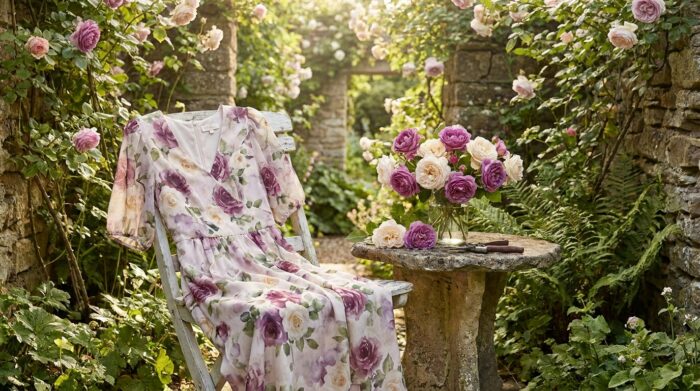
Floral mother of the bride dresses are joyful, romantic and naturally suited to a wedding. A well-chosen print can look fresh at a garden ceremony, painterly at a vineyard reception and surprisingly chic at an evening event.
The difference between a floral that looks elegant and one that looks busy comes down to three things: the size of the motif, the colors, and whether the print matches the formality and season of the wedding. Here is how to get each one right.
Choosing the size of the print
Print scale changes the whole effect of a dress, and it is the first thing to decide.
| Print size | Effect | Works best |
|---|---|---|
| Small or ditsy florals | Delicate, soft, can blur from a distance | Daytime and casual weddings, smaller frames |
| Medium florals | Balanced and easy to wear | Most figures and most dress codes |
| Large painterly blooms | Bold, artistic, a real statement | Tall figures, simple cuts, outdoor ceremonies |
| Placed or border prints | Flowers concentrated at the hem, shoulder or one side | More formal events, where an all-over print feels too casual |
| Embroidered or 3D appliqué flowers | Textured, luxurious, tonal | Formal and evening weddings |
As a rule, keep the scale in proportion to your frame. A petite woman can disappear under huge blooms, while a tall woman can carry them beautifully. Medium-scale prints are the safe middle ground for almost everyone.
Picking the colors of the print
A floral dress contains several colors, so look at the background first. It sets the overall tone and is what people notice from across the room.
- Dark backgrounds (navy, black, deep green) make a floral more formal and work well in fall or in the evening.
- Mid-tone backgrounds (dusty blue, sage, mauve) feel soft and romantic for spring.
- Pale backgrounds need care: a mostly white or ivory dress, even with flowers, can look bridal in photos. Choose a background with clear color.
Then compare the flowers with the wedding palette. You do not need to match the bridesmaids, but one shade in the print that echoes the bouquets or the décor ties you into the photographs naturally. Ask the couple for their colors before you shop.
Which dress code suits a floral?
Florals are at home at daytime, garden, semi-formal and cocktail weddings. For a formal or black-tie evening, a printed chiffon can still work, but tonal embroidery, floral lace or 3D appliqué look more appropriate than a bright all-over print.
- Garden or daytime: midi wrap or A-line dress in a medium print, with block heels.
- Cocktail: knee-length dress with a placed floral or a dark background, structured clutch.
- Formal evening: floor-length gown with floral embroidery or a deep-toned printed chiffon.
- Beach or destination: flowing maxi in a light print, flat sandals.
Florals through the seasons
Flowers are often associated with spring and summer, and that is where they feel most natural. In warm months, look for light fabrics such as chiffon, georgette and cotton voile with soft pastels or cheerful brights. Our guide to summer mother of the bride dresses covers the fabrics and shapes that keep you cool when the ceremony is outdoors.
Florals also work in fall and winter, with a different mood. Dark backgrounds, richer colors like burgundy, rust and plum, and heavier fabrics such as crepe, jacquard or velvet with floral embroidery all feel seasonal. A dark floral dress with a velvet jacket or a wrap is lovely for an autumn wedding.
Floral mother of the bride outfits beyond the dress
Not keen on an all-over floral dress? There are other ways to bring flowers into your outfit.
- A plain dress with a floral jacket or duster coat.
- Wide-leg trousers with a floral silk blouse.
- A solid gown with floral lace sleeves or a floral cape.
- A floral fascinator or a hat with silk flowers paired with a plain dress.
Floral mistakes to avoid
A few pitfalls come up again and again with printed dresses for weddings.
- A print that is too casual. A cotton sundress with a small floral looks lovely at a picnic but underdressed next to the wedding party. Choose a fabric with some drape and a cut with structure.
- Clashing with the bridesmaids. If the bridesmaids wear a floral print or a strong color, a floral in competing tones can look chaotic in group photos. Check with the couple first.
- Too many details. Ruffles, tiers, bows and a bold print together overwhelm the eye. With a busy print, keep the cut simple.
- Ignoring the light. Very bright prints can look harsh in midday sun, while very dark ones lose their pattern in a dim evening venue. Mid-depth colors photograph best in most settings.
Try the dress on in daylight if you can, and take a photo from a few steps away. That is how most guests, and the camera, will see it.
Styling a floral dress
Let the print do the talking. Pull one color from the pattern for your shoes or clutch, and keep jewelry simple: pearls, small drop earrings or fine gold. Avoid mixing several patterns, and skip a heavily embellished bag or necklace that would compete with the flowers. A solid wrap or jacket in a shade taken from the print looks polished for the evening.
For a complete picture of the colors, cuts and calendar involved in choosing your outfit, see our full guide to dressing as the bride’s mother.
Frequently asked questions
Is it appropriate for the mother of the bride to wear a floral dress?
Yes. Florals are a classic choice for daytime, garden and semi-formal weddings. For a formal evening event, choose embroidery, floral lace or a dark background.
What size floral print is most flattering?
A medium-scale print suits most figures. Small prints look delicate on petite women, while large blooms suit taller women and simple cuts.
Can I wear florals to a fall or winter wedding?
Absolutely. Choose a dark background, deeper colors and heavier fabrics such as crepe, jacquard or velvet.